Simple musings, thoughts and ideas on educational technology, tech integration in the classroom and tech coaching . . . from my journey as a tech coach, computer science teacher and international educator.
Showing posts with label reflection. Show all posts

Tuesday, June 6, 2017

Who are you really serving? How far does your reach extend? Why did you become a teacher in the first place?

On changing schools (again), moving away from Ed Tech (not completely), moving back into the classroom (why would I do that?!?), and bringing this blog to a close (perhaps) . . . 

The title poses some very good questions that I have been pondering over the last few weeks and months of this turbulent school year.  Going back to just over a year ago, having major cardiac surgery (in a foreign country none-the-less) certainly made me pause and think.  Add to that moving house/country/schools/continents brings everything into sharp focus and scrutiny.  There have been a number of ups and downs, and complete turn-arounds in the last 12 months which have culminated in a whole lot of change for me.  All of these changes were planned (in one way or another) and initiated by me and my family - we just didn't plan on doing everything at the same time.  That's just how it all worked out.  Now that we are a year down the track, I am making another big change with moving schools again, moving away from ed tech and returning to the classroom.  Why would I do that, you might ask?  The more that I think about it, the more I come back to the three questions in the title of this post . . .

What lies on the road ahead?  Are you on the right path?

Who are you really serving?
In my current role as an ed tech coach, I have really examined this question this year.  At my previous school, my role meant serving the entire student body (directly in classrooms, through technology tools and systems, and through various interactions with student leadership, clubs and the school community), the entire HS faculty (through developing teaching and learning with ed tech integration, through PD/training/support, and through building a school culture of professional sharing and collaboration), and the school as a whole (through my role as a co-director of digital learning, and through the development of school systems/procedures/organisation for school growth and innovation).  This year has been really difficult as these avenues for growth and development are in their infancy here, and out of my sphere of influence - which is just not a good fit for me.  Leadership here thinks my time is best spent acting as a technician (which we have enough of in IT Services), working as a substitute (wait, what?!?) or covering the ugly jobs of others (like planning the sub coverage for the day, very early in the morning).  My role here seems to be serving administration, as they simply do not understand what my role is, what my strengths and abilities are, or how I can help the school to grow and develop.  Am I serving the school community as a whole here - not really.  Am I doing what I thought I was brought here to do - definitely not.  Am I working in an environment which is conducive to school growth and innovation, as well as providing a platform for my continued learning and development - nope.  Which leads to the second question . . .


How far does your reach extend?
I can't help but compare my previous school to the current one when I consider this question.  The visual that pops into my mind is having my arms blown off by a grenade that has been handed to me . . . not a pretty image.  In my previous school, I contributed to school growth everyday in many different areas across the school.  Over the years, I helped to change the school timetable and master schedule, moved the entire school to become a Mac school and use Google Apps for Education, bring in external collaboration and certification programs for teachers like Google Certified Educators and GEG Poland, create flexible classroom environments, and update and evolve the courses and programs on offer.  Here, I have not been allowed to contribute to many of the bigger projects around the school such as building and outfitting the new campus, selecting school systems (LMS, SIS, SIMS), considering platform change for the laptop program, or bringing in/back Google Suite.  Everything has been relegated to "not now", "maybe next year", or "there is a team working on that already."  Disappointing, frustrating and again, not a good fit for me.  Not being able to contribute to school growth is demoralising, and does not help to build a sense of collegiality or ownership in the school.  Working in a strictly "top-down" environment where you have no voice and certainly am not heard, is not for me.  Looking back, I wish I had a better way to evaluate this aspect of a school from far away, before uprooting the family and making the jump.  In terms of evaluating where a school is at with its approach to educational technology, I think this is a very important question when considering a move that can only be answered truthfully by going there and seeing it for yourself.  What people say is so different from the realities of the environment, as everything is coloured by their own perceptions, attitudes and how they want to portray themselves, the faculty, the school or teaching and learning in general.

Why did you become a teacher in the first place?
This is the big question that I think all teachers should think about from time to time.  I first started thinking about becoming a teacher when I was halfway through my 3rd year of university.  I realised that my love for programming and computer science, and the kind of work that I was doing for my university courses, was not reflected in real-life and industry after graduation.  I had the benefit of an older brother who was already working in the software industry of the late-80's, and I could see the kind of work that he was doing was not for me.  When I started asking my friends and family what I should do, they all said that I had been a teacher all of my life - first as a school tutor, then as a lab tech in uni, and teaching assistant during the school year and over the summers.  Working with people, whether they be adults or students, is what I thrive on.  Seeing the lights go on, making connections, expanding someone's thinking and pushing their boundaries - these are the things which make going to school everyday worthwhile.  I have been doing this for 28 years now, and this is the first time that I have been in a school environment where much of this is lacking on a day-to-day basis for me in my current role.  If that is not a signal that I need a change, then I don't know what is?!  If what you are doing does not bring you some level of fulfilment and joy, then I suggest that you really think about the path you are on.  I have realised that I really need to get back into the classroom, to get back to teaching students who want to learn rather than adults who do not.  I have realised that I have been teaching CS in one way or another for my entire career, and I miss having my own classroom and students.  I need to work with the Growth Minded and problem-seekers, not try to change the very Fixed Minded and those who set in their ways.  Time for a change.  Time to look for a "better fit".

Does everything fit together?  Are you in the right place?


So, what am I going to do?
I am almost finished this school year, and this may be my last blog post for awhile.  It has served its purpose - to record my thinking and reflections on ed tech, to help me process everything, and to share it with anyone who cares to look.  Each of my posts has averaged well over 100 clicks/reads so they have at least been seen (I just don't know how many of those clicks were from bots trolling the internet ;-).  But I really started writing this blog for myself and it has run its course for the time being.  If you are reading this post and it is well past June 2017, then perhaps I have not come back to it in my new role back in the classroom.

I have come to realise that right now, I am not reaching very many students.  Being a coach and working with the faculty means reaching the entire student body through the faculty.  But the culture of the school has to be in alignment with this path, and school leadership must support building the path and setting a course for the faculty to follow.  Without this roadmap/vision/direction and without the authority to create them, the school simply remains in stasis, frozen in place.  My thinking now is that I can affect more change and reach more students by returning to the CS classroom . . . and a lot more fun along the way.

I can't wait for next year - going back to teaching Computer Science full time is complete serendipity!  They say "timing is everything", and in this case the timing was perfect for a change.  I have never had the opportunity to go to a new school with an established CS program that is growing, and never had another teacher to work with and share classes.  Moving to one of the top few international schools in the world is a great opportunity that could not be passed up.  Returning to the classroom, going back to my roots in CS, rejoining the AP community and (hopefully) getting back to the APCS exam reading next year, leading school trips and coaching school teams . . . it's all happening next year!  I know that I am a geek at heart - returning to my true geeky self just feels right!


Big Takeaways
Despite the frustrations and "poor fit" of the school this year, there are some big takeaways (as there always are things to learn), such as:

  • Taking the opportunity to return to Asia (which we missed so much), and getting out of Europe at an opportune time (it seems to devolving and becoming unsafe in many places) have been good for us as a family
  • Moving the school forward with ed tech and integration (even if some of the steps have been baby-steps, the faculty are at least moving), and being able to shift some people's thinking to "we are all technology teachers" has been important for future change here
  • Moving a school towards innovation and updating teacher's pedagogy is a massive job, and it cannot be done without the support/endorsement/realisation of the school leadership as a whole - leadership's understanding and acknowledgement of ed tech role in school development is key, and has to happen before any real, deep and meaningful change can occur in the school
  • Chip and Dan Heath's book Switch has been very helpful for me to frame my thinking and understanding of the very Fixed Minded (it has to do with the associated identity of the person involved, and their particular environment, rather than their personality or disposition), and my reflection on the how/why some particular initiatives have failed here
  • Reconnecting with the international Ed Tech community in Singapore and Asia (and I will continue to work with Apple, Google and the international schools community as I transition back to the classroom)
  • Concentrating on my recovery and health (the change of environment, climate and diet have been great for me ;-) plus being in Singapore where we all "just fit in" (for a mixed race family, living in Turkey, China and Poland has been challenging at times) has been a true revelation
So, this is the plan for next year and the foreseeable future . . . and it feels like I am going home!  Wish me luck!


Wednesday, February 22, 2017

Coaches = Givers

Have you watched this recent TEDTalks by Adam Grant which defined Givers and Takers (and Matchers)?  As an educational technology coach, I watched this with great interest and reflected upon Grant's model as applied to my work as a coach.  If you haven't watched it yet, then here it is . . . definitely worth the 18 minutes of your time!


Here are the key moments that I picked out from his talk . . .
  • 3:40 - Givers make organisations better . . . Schools need to recognise and acknowledge this.  My previous principal always said that I was a problem finder and would immediately start working on a solution without being asked - something that was greatly appreciated.  But the work of Givers is not always appreciated - please see a previous post about what I call "guilty by competence".
  • 5:30 - Protect Givers from burnout . . . As a self-identified Giver, the environment and school culture that I work in has a profound effect on me.  The act of changing schools has forced me to reflect upon this a lot this year.  How school leadership values our role as coaches and change-agents within the school, makes all of the difference with how our day-to-day work progresses and how quickly (or slowly) we "feel the burn".
  • 6:30 - Encourage help-seeking behaviours . . . Get more people to act as Givers by creating/building a culture of giving, providing help, and sharing.  Again, this is all about changing the culture of the school, which comes from top through leadership and from the grassroots movements which encourage collaboration, professional sharing and growth.  Without the support for such bottom-up shifts in culture, the Takers dominate the culture of the school and the Givers get burned out.
  • 7:50 - Get the right people on the bus . . . To me, this speaks about hiring practices and considering people's Mindset (in my case, mindset towards educational technology).  One way school leadership can address and build a positive school culture is through effective management of hiring practices for faculty and staff.
  • 8:50 - Weed out the Takers . . . This is an inherently difficult thing to do in schools, but entirely necessary and vital for school development.  As a teacher for almost 3 decades, I have seen the ineffective/disgruntled/unmotivated/coasting/bully teacher at every school that I have worked in across 3 continents.  Admit it, this is a problem at every school in the world no matter how big or small, how affluent or inner-city, how well resourced or under-funded.  School leadership needs to be able to move someone on who is detrimental to the organisation as a whole.  More easily said then done, I know . . . but just because it is difficult doesn't mean that it isn't necessary.
  • 9:10 - Characteristic of Agreeableness . . . I only bring this part up because I am Canadian, eh?! ;-)  Sorry about that . . . 

My takeaways from this?  Coaches are generally Givers by nature (there are a few that I have met who I would classify more as a Matcher though) and they are not the only ones in the building.  As such, schools need to protect them and cultivate a culture of giving/helping which will benefit school growth and development through building a positive school culture.  Would you classify yourself as a Giver?  Have you ever worked in a school where the Takers stand out and dominate the school culture?  If so, how did you survive in that kind of environment?  Or did you hit burnout and move on, as changing the school culture is just too hard or too long of a process?


Wednesday, February 15, 2017

Reflecting About Tech PD at My School

I recently read this article from eSchool News about 4 common mistakes made when delivering tech PD, which made me reflect on how these 4 mistakes happen in my school.  Have a read through this article and see if anything in it strikes home with you - http://www.eschoolnews.com/2016/11/30/tech-based-pd/?all.


In summary, the 4 mistakes (as I interpret them for my reality here at my school, particularly in the secondary school where I work) should be addressed or considered in the following ways:
  1. There is not enough support of Ed Tech to do our jobs most effectively, when teacher's priorities are focussed on their classes/students/curriculum.  In my school, Ed Tech is relatively new and has not had a very positive history/track record over the past two years so it seems to be way down on the list of priorities.  We need help from senior admin and through the strategic plan of the school to make tech integration a long-term priority.  Time and resources need to be dedicated to Ed Tech in order to make change, which involves changing the culture of the school as a whole.  And we all know that changing a school culture can be a long and difficult process.  Without the full support and backing of school leadership, this becomes an almost impossible job.  We are all in this together!
  2. Offering tech PD outside of the school day just doesn’t work.  I have experienced this in my previous 3 schools and it still applies here.  When I completed my Action Research project for my masters program in my last school, much of the research supported teacher efficacy is directly linked to training/PD being conducted within the regular school day.  PD that is relegated to after school, on weekends, or optionally during lunch/break times might have some initial success but eventually will fail due lack of teacher engagement.  The common argument of “not enough time to do this” will always be there, and we can’t take away planning time or “free” time (like lunch) to do this.  Training and PD has to be regularly planned/scheduled, and preferably differentiated too.  That is why I have found Speed-Geeking activities to be more effective, well received, and showed greater overall growth across the faculty than traditional "coffee mornings" or "tech lunches".  
  3. Do not rely on online or video-based self-guided training – it will fail over time as it falls into disuse and becomes out-of-date.  There is a time and place for its use, but it should not be the only means of delivery of training/pd across the school.  I created a bank of "how to" MacOSX videos when we went through the platform change process with the entire faculty and student body.  Initially, I used these videos to differentiate learning and transitioning to the Mac for faculty depending on their experience with OSX.  This appealed to some of the teachers with some experience and who wanted to learn on their own, and to most of the more advanced users who really only needed to fill in some details of the set up of our school machines.  When the rollout moved to the entire student body the following August, I again used the same bank of videos to differentiate student-led training workshops for about 100 of 300 students.  Since then, the videos have been used repeatedly with new students coming into the school laptop program as part of their tech orientation.  Now that some years have passed, I would be surprised if these same videos are still being used as they would be very out-of-date.  Video training definitely has its uses, so my takeaway here is not to rely on it as the sole means of delivering PD.
  4. Forcing the integration of technology into the curriculum also does not work – many teachers (especially in the HS who teach content heavy curriculum/courses) need to see the “value added” or the benefits of doing something with technology first, before they will engage with it. The same argument of “I don't have the time” will always come up and can be properly translated into “it's not a high priority”.  So how do you change this mindset?  How can you change the priority level for teachers?  Part of the answer relates back to #1 above where Ed Tech integration needs to be a school-wide priority which is ongoing.  But be careful here - do not connect integration to teacher evaluation or offering contracts as this will undermine why teachers are doing anything with integration at all (it will be seen as just jumping through hoops or checking off boxes as part of the job).  Instead, integration should be directly connected to professional learning, growth, sharing and collaboration through connecting training/PD to professional goal setting, professional learning communities, and support/coaching/training in and outside of the school.


How do you think these 4 common mistakes apply to your school and your personal/professional reality and perspective?  Did the article make you think about PD in a different way?


Thursday, January 26, 2017

Can Shared Leadership Really Work?

Note - this post was originally written back in June (over 6 months ago, so all references to dates are for the 2015-16 school year) but never was published for a variety of complex and personal reasons which I won't get into here . . . but I found the text in my notes and thought it needs to be published.  So here goes, with a few small tweaks and updates . . .

This year, I became a "director" for the first time in my career. Now that the school year is almost finished, I would have to say that this social experiment in shared school leadership is partially successful and partially a failure. Just to back up for a moment, the school director had no intent to explore shared leadership for educational technology - he wanted to either continue with the traditional leadership structure with a Tech Director, or split off educational technology from technology services and support.  In discussing this latter option and what that would look like, I was asked to draft a job description for an Ed Tech Director. Some of you reading this now will remember me asking for copies of your job descriptions and a structural breakdown of technology at your school (BTW - everything that I collected from you back in the fall was greatly appreciated).  As the job description started to take shape, it became apparent that out of our team of 4 tech coaches, more than one of us would be interested in the director of ed tech position. With the potential for terminal discord and a fracturing of our working relationship as a team, we jointly decided to propose a shared leadership model.

After about a month of planning how we would work together to co-lead educational technology across the school, the four of us (tech coaches) were appointed to be Co-Directors of Digital Learning. Our proposal separated ed tech from tech services, and a new person would be hired to manage and lead IT which includes hardware, infrastructure and tech support. The four tech coaches (2x ES, 1x MS and 1x HS) would have dual roles supporting tech integration in our school division (or assigned grades), plus collectively leading educational technology across the school.  

With shared leadership - is everyone looking/moving in the same direction?  Is there a clear, shared and articulated vision?


We have been working with this model since about November of this school year, and I have really mixed feelings about how successful it has been.  In general, we have been able to move forward with a number of initiatives and projects which probably would not have happened or have progressed as far in a short time if we had stuck with a traditional Tech Director model. As there are four of us Co-Directors, we could divide up the work and push forward with projects which interested us or were important to us. For example, some of the bigger projects that I led were:
  • promoting and organizing the third annual Hour of Code, which featured events spread across the entire school
  • formally adopting the ISTE Standards for Students (through embedding the standards in our PYP and MYP planners), Teachers (currently working on adding the standards into our new teacher appraisal process), Coaches (which we adopted as tech coaches a few years ago) and Administrators (which we adopted as Co-Directors of Digital Learning)
  • writing and formalizing our job descriptions as tech coaches and as Co-Directors, to make them into usable documents which accurately describe both of these roles and what they truly entail
  • bringing Learning2Europe to Warsaw, taking on the role of conference chair and forming a team of teachers and staff who will form the core of the organizing committee and support team 
  • initiating an exploration and testing of Google Expeditions Beta along with Google Cardboard for use in the classroom
  • proposing a new project to put iPad Pro's into the hands of teachers (as an interactive whiteboard replacement and to facilitate teachers being able to annotate, comment, sketch/draw/graph on the fly in class) through a two stage approval program


So what were the challenges and problematic areas?

1) With a group of four individuals who are given "carte blanche" to initiate new ed tech projects, there is no single decision maker to say whether it is the right time and/or place to start each project, or to oversee how it all fits into the overall vision for the school. As a result, what we end up with is a collection of projects all in various stages of development, which may be disjointed, out of alignment and sometimes even at odds with each other. Without a single decision maker, everything moves forward on their own pathways, but sometimes in different directions.  

With shared leadership - are everyone's views of a similar hue, or completely different colours?


2) How well the group functions together really depends on the different personalities involved, their individual styles, and how well they mesh together. Any friction or lack of trust creates disharmony in the group and the team breaks down immediately. We all know how hard it is to regain trust once it is lost, and how quickly trust can disappear entirely. Given #1 above, trust will always be eroded as friction builds from differing opinions on direction and vision. Conflict will also come from the simplest of things, like how the group interacts with each other, talks to one another, and is inclusive or exclusive. In fact, the team started off with a feeling is distrust due to how we came to even brooch the subject of shared leadership. As the school director favoured a business approach to leadership, he pitted the four of us "against" one another and was looking to appoint one of us to the director role. This approach forced us all into feeling distrust for one another, which we had to address as a team before anything productive could be done as a group. 

3) Following on from #2 above, I think that the current school organization with two coaches in the ES, but only one each in the MS and HS created an imbalance, as two of the Co-Directors work very closely together and tend to have a unified position on any issue. Not that this is a bad thing - having at least part of the group working closely together is better than not having any of the group at all.  However, this made making decisions about the whole school difficult with four "votes" in total, but an internal coalition of two in place. This last point is key if shared leadership is to work smoothly. Instead of having each member of the shared leadership team be all things to their constituency (their school division), they should all represent the entire community at all times. Or perhaps it could be divided up by school division, but in a more balanced way such as two for elementary and two for the secondary school.  

Epilogue on this last point - this re-organisation of the tech coaches has actually happened for this school year, but not for the co-directors role (I think the school just kept three co-directors now that I have moved on and changed schools).  I think shared leadership would have a better chance of succeeding with a smaller group than 4.  I can think of many dual partnerships which were spectacular (Lennon and McCartney, Jobs and Wozniak . . . you can add to the list), but it becomes harder to think of some great examples of groups of 3 or 4.  Too many chiefs or chefs in the kitchen perhaps? 


In retrospect, I am happy to have had the opportunity to work in a shared leadership environment as it provided a unique learning experience and collaborative work at the highest levels. If another shared leadership opportunity comes up in the future then I will be better prepared and so much wiser about what the pitfalls are and try to address them up front.  Can it work productively and smoothly?  I am sure that it can, and I wonder if it is happening anywhere out there?  Have you ever worked in a shared leadership role? Did it/Does it work? What was your experience like?  What were/are the challenges?

Thursday, October 6, 2016

Redefining Search!

Note - this post was originally written back in May/June but never published for a variety of complex and personal reasons mainly having to do with my health . . . but all is good now!


May 2016 - I meant to write this posting about a month ago, but things have gotten a little bit away from me with moving back to Asia for next school year. Too much to do with so little time left in Poland before we move on from here. On a fast train heading south to Kraków gives me a bit of time to reflect, write and just think . . .


After attending Learning2 Africa in Johannesburg in the fall, I have been thinking how I needed to alter my approach in the HS towards teaching research skills to students.  For the last number of years we have taught and reviewed research skills with all G9 students as they entered the HS (through a series of projects, lessons and workshops culminating in a large, personal research project in their English class) and in G11 as students began the Extended Essay process. Changes this year in faculty, curriculum, and the approach to launching the EE have resulted in most of this work with research skills falling away. After attending Jeff Utech's extended session at L2Jo'burg on research skills, I knew I had to do something different right away.

Rather than continuing with the model of periodically working with whole grades of students, I shifted my focus to the faculty. My reining was simple - up-skill the entire faculty to give them the same toolbox of resources, techniques and strategies and they will in turn use, model and train all students in the same way, in every grade and every class. What I developed was a differentiated workshop targeted at individual departments/disciplines which worked through how research skills have changed with Internet-enabled mobile devices in the hands of every student. As teachers, if we are still asking questions which can easily be Googled, then we are asking the wrong kinds of questions of our students. Are your students trained in how to conduct a really deep and targeted search, or to cope with conducting effective research when they do not have any search terms?

To answer these questions, I put teachers into research scenarios which changed their thinking about research.  When you have no search terms to begin with, research ceases being a solitary act. It naturally evolves into a collaborative and creative process involving critical thinking and communication - the 4 C's of 21st Century Learning. For example, in the workshop I had teachers work in small groups and try to answer the following questions about this image: what is shown in the photo and where was it taken?

Do you know what this is?  And where was this photo taken?  [can you figure it out without using Image Search?]

Individually, most teachers had no idea where to start with such a task. In their small groups some started discussing what they thought it might be and what search terms they could use to describe the image. All sorts of search terms were tried ranging from "golden dog poo" to "swirls" and to "golden ratio spirals". Other groups tried to work around the task to find the actual photo on the web, or to use Google Image Search to find similar images, but I did not provide them a copy of the image to work with. The most successful groups spent a lot of time talking and collaborating about what they thought the image might be, before jumping into any searches. These groups hit upon really important search terms like "Buddha" and "statue" through their collective knowledge, which they used to quickly used to figure out that these are the top knots on the back of Buddha's head at Wat Pho (the reclining Buddha) in Bangkok. Every time I did this workshop with another department team, they all agreed that this exercise was not only fun and exciting, but very thought provoking. As we are now an MYP candidate school, this exercise placed teachers in an open inquiry process which was unfamiliar for some.

Some of the groups who started with an easier task wanted to try the more challenging images rather than finishing the rest of the workshop. Simple testimony of how much they enjoyed working on this. The remainder of the workshop focused on sets of resources and alternative sites for research, compiled by discipline.  If you are interested, you can use the following shared doc as a resource with your faculty or students.

Harder - Who are these women (what "people" are they)?  And what does "what they are doing" mean?

Following the ripples and impact of these workshops was really interesting. It was great to hear about how teachers took my materials back to use with their classes for ongoing research projects, and how students could immediately employ these techniques and resources for their projects. Other teachers still required more support  and booked me to work with their classes - even small steps forward are still making forward progress.  One tech-hesitant teacher took the initiative to present these skills and resources to their class who were engaged with an large-scale IB Diploma Internal Assessment involving deep research into a topic of the student's choice. This teacher still felt that they could not completely help all of the students in their class with their research so I was brought in to work with a few particular students. I ended up working with two students in particular who were truly "stuck" in their reach process and it was really gratifying to help them get unstuck, and then immediately pass on some more advanced techniques to their friends . . . Students teaching students . . . it doesn't get better than that!

Another teacher had an epiphany in the workshop, and took my exercise with open, collaborative inquiry revolving around an image, and adapted it directly into their lesson . . . the next day! This teacher had been struggling with a unit centered on the Renaissance and the rise of religious art and its symbolism. The lesson changed from a lecture and discussion about a few important pieces of art, to open inquiry process where small groups of students truly looked at and analyzed a piece art to discover its importance, symbolism, and hidden meaning. This teacher told me with great enthusiasm about how the class were looking and thinking deeply about art for the first time . . . in years . . . and how much they enjoyed the process of discovery.  Huge win, and a big step forward.

Epilogue (October 2016) - a number of months have passed by since I wrote this, plus I have changed schools and continents. At my new school in Singapore, not a whole lot is different and I have discovered that I need to take the same approach with faculty. So Redefining Search is being rebooted and recycled, and relaunched with both faculties that I work with (my new school has two separate systems/curricula under one roof).  It's interesting to think about how the "students are digital natives" thinking has really taken hold all over the world, and how teachers don't often consider how student's search skills (and their own) need upgrading.  Taking this approach of up-skilling the entire faculty in order to reach the most students (hopefully all of them ;-) has been a successful and necessary approach at my last two schools . . . so, how are your search skills and the skills of your faculty? 


Friday, November 13, 2015

Takeaways and Reflections from Learning 2 Africa

Every year, I get recharged from attending Learning 2.0 - I just want to keep going back.  There's something about the energy, connection and the learning that happens there and beyond that draws me to L2 events, whether they be in Asia or Africa.  Last year, I was very fortunate to be invited to be part of the organising committee for the first L2Africa in Addis Ababa, and also attended (and helped out) with L2Asia in Bangkok.  This year, I continued to help out with L2Africa in Johannesburg (specifically with organising the Cohorts) and will also be working with the crew to launch the first L2Europe in Milan (spring of 2016).  On the first day in Jo'burg, Jeff Utecht called me a Learning2 "junkie" which I don't mind . . . I think it's an apt description of getting my annual (or bi-annual ;-) "fix" for all things ed tech.  Learning 2.0 really make me expand my thinking and makes me hit the reset button every time . . . it gives me the time and space to find balance between my teaching and learning, between work and play, between high tech and low/no tech, and between what's happening at my school and everyone else's.


So what are my takeaways from the second L2Africa?  Here's some of my thoughts:

  • Size does matter - this year's L2Africa was almost half the size as last years (or at least it really felt that way).  Part of the reason it felt so much smaller was the enormity of the AISJ campus - beautiful and spread out across a hilltop . . . it offered lots of open spaces for everyone to find their own space (but that impacted on the connections you could build during the breaks, lunches and even the Unconference times).  A secondary reason is due to the higher concentration of AISJ faculty who attended the conference.  Having a higher number of local participants "watered down" the opportunities to connect and share with other teachers from across the region, plus the local faculty often did not participate in the social gatherings and dinners for the conference.  Working and collaborating with other teachers from around the world is a big part of Learning 2.0 - future conferences really need to keep this in mind.
  • Having a smaller conference impacts on the conference experience as a whole - a number of tweaks and changes were made to the conference structure and organisation as a result of the lower registration numbers.  The two areas which really stuck out for me were the reduction of Cohort meetings (from 3 down to just 2) and the organisation of the Workshops (increasing the Workshop time slots to 3, but having workshop leaders present twice in order to fill up the time slots).  With the Cohort meetings, only having two of them meant that the first meeting was occupied with getting to know everyone in the Cohort, and getting into some of the group's "burning questions".  The second/final meeting was entirely filled up with "other business" and completing the conference feedback, so it was a bust.  Most of my Cohort were experienced Learning2 folks, so we bonded pretty fast and were able to get down to connecting and sharing - but I know that other Cohorts never really bonded as they did not have the time to do so.  Also, many of the members in my Cohort lamented the missing Cohort meeting on the Friday evening as they got so much out of it last year.  My recommendations here are to keep the three Cohort meetings and lengthen the last one by 30 minutes to provide the extra time needed for completing the conference feedback, while not taking time away from the Cohorts.

  • Getting back to the basics of Search - a really started thinking about this while sitting in Jeff Utecht's extended session focussing on teaching students in this age of information overload.  For the last few years, I have been delivering lessons to all G9 students (connected to an English 9 research project) on how search engines and ranking work, how to do more effective searches, and techniques for refining your search.  What became apparent to me sitting in the workshop, is that I really need to go back to the faculty and do all of this work once again with them.  "We are all technology teachers" and effective search techniques is something that we should all be teaching/using/demonstrating/continually reinforcing every year at all grade levels.  "Oh duh!", right?
  • Recruiting 2.0 - sitting and talking with Maggie Hos-McGrane from ASBombay about the Global Recruitment Collaborative was enlightening and inspired.  The work that has gone into creating this collaborative and cooperative option which connects the top schools in the world is something that my school needs to tap into.  My school meets all of the qualifications to join the GRC (we offer at least one IB Program, have a 1:1 laptop program, and are looking for innovative international teachers each year) but we have not done so . . . I really need to talk to our new director about this, and Maggie has sent another invitation out already.  This can only benefit the school in the long run by attracting the type of quality and experienced faculty without any additional cost to the school.  Win for the school, and win for the faculty.

  • Making a Maker Space - this is a project that has already been started here, which I am not really involved in.  But that doesn't mean that I'm not interested and can't build my knowledge about it.  From my second extended session of the conference, I got a huge insight into how a Maker Space can be built and resourced with simple tools, equipment, and donated stuff (like old children's toys and building blocks or Lego).  All of these resources can make for exciting building/design projects which are open ended yet closed in scope.  In a very short time, our group built a collaborative Rube Goldberg machine in sections, which had to integrate and connect with the other sections to form a working machine with a specific goal.  Not only was this a great collaborative learning and building experience, but it all about the bonding and working as a team (even if we had never met each other before).  All down with simple stuff in hand - no robotics, motors, or digital anything.
  • Using Wikipedia - Jeff Utrecht had some great information and writing projects (for HS students) linked to using Wikipedia with students.  Wikipedia is the world's largest collection of data/information, yet many teachers refrain from using it personally and for education.  This anti-wikipedia culture has to change, beginning with educating faculty about how wikipedia is curated and rated for accuracy.  Delving into the rubrics for accuracy and relevance of information is closely tied to citations and authority of sources - aren't these precisely the topics and skills that we want to our students to know and use intimately?  Adding to and correcting Wikipedia entries and using the rubrics provided are great writing exercises which have a world-wide audience, is authentic and meaningful, can be linked to a student's CV and university applications (through their Wikipedia profile and account).  Imagine if you can show on your application that you have contributed to a number of Wikipedia entries on a variety of topics which have been accepted and approved by the world at large and the expert curators?  How powerful would that be?  Instructing my faculty about using Wikipedia in the classroom has always been something that I have done in the past, but now I have more ammunition for moving this forward across the school.


Although this year's version of L2Africa was smaller than the first edition in Addis, it still had its moments and takeaways for me.  The MS/HS Technology Leaders Cohort was great and jumped right into sharing and collaborating - I hope this group keeps in touch through Google+ in the future.  There was a lot of experience in the room, which I hope we can all leverage in the future.  There are a number of takeaways listed above which I need to get working on to implement in the HS here this year . . . so I had better get to work!  Did you attend L2Africa?  Are you planning on going to the first L2Europe in April?  What are your takeaways from Jo'burg or your "burning questions" going into Milan?

Wednesday, September 23, 2015

Coaching with Mindsets in Mind - Big Takeaways for the Start of a New School Year

Big Takeaways for the Start of a New School Year

Well, the new school year has already gotten underway, but it seems that I am just now coming out of the fog and swirl of activity from the "boom" that marks the first day of classes.  With fall trips behind us, laptop rollouts and MAP testing done and dusted, and classes finally settling into a rhythm, it is time to reflect upon coaching from last year with an eye towards the future . . .


Here are my takeaways and thoughts/extensions for each:

  • From my end of year coaching survey, I believe that you can have someone who is a capable or even advanced user/facilitator/integrator of technology in the classroom, who is still in a Fixed Mindset when it comes to educational technology.  They are using/integrating a number of technologies effectively in their classroom, but are very comfortable with what tools they employ and are not open to looking at or experimenting with new tools.  With the train analogy from an earlier post - they are in the lead car but are doing nothing to help move the train forward as a whole, or to lead those in the front of the middle car into the lead car.  They remain siloed and comfortable in what they are doing in their classroom.  Sidebar - this is where the train analogy starts to break down, as the cars represent where a teacher is on the ed tech scale of integration, rather than incorporating their mindset as well (which is perhaps, more important).  So what's the way forward?  Screening for mindset and nudging these types of faculty forward into a Growth mindset through conversations and exposure to new tools which can be specifically employed in their classroom/subject area/discipline can help to shift them into a more collaborative and open stance.  These faculty members might be shifted through an individual conversation or through a conversation with a peer or in their own Personal Learning Network (PLN).  Or perhaps the shift will occur through some "just in time" training that comes up, or through exposure to a new tool or idea during a PD workshop, conference or Speed-Geeking session.  It's hard to identify when or where a shift in mindset will occur with these folks, but seize the opportunity when it arises and turn these folks into teacher-leaders with ed tech.
  • Again, from my end of year coaching survey, there are some faculty members who take a passive role when it comes to coaching.  Their stance is that they do not have time to consider new tools or to connect with other teachers in their discipline.  They expect everything to be brought to them for their consumption/consideration where they will passively decide whether it is something worth their time (usually not, or it will be "deferred" until a later time). These faculty members do not engage in the coaching process, are not very self-reflective and are therefore in a Fixed mindset.  They are notoriously hard to reach and to work with, as they would truly rather ignore you as a coach, then actually engage with you to improve teaching and learning.  These folks need to be nudged into a Growth Mindset to engage in the coaching process, which is hard to do.  If they are part of a team (teach a shared course, or are part of a grade level or subject team), then perhaps reaching this particular faculty member is best done through the team.  If their team decides to move forward with a new tool or approach, then they will have to follow along.  The toughest "nut to crack" is the stand-alone teacher who does their own thing and does not really belong to a team (they typically teach all stand-alone classes).  So how do you reach them?  By engaging them in conversation about their classes at every opportunity that presents itself, and by exposing them to new tools along the way.  The Walk-through/Check-ins that I regularly conduct also help with reaching these teachers, as it brings coaching and the conversation directly to them individually and personally.  All of these points of contact will help to nudge them forward, some faster than others of course.
  • Working directly with a team of Growth Minded faculty has been very fulfilling professionally for me, as well as for members of the group/team.  This is what I do with the HS Tech Collective, which has grown out of what started as a decision making tech committee, into a collaborative think tank for professional sharing around educational technology.  It is not composed of the most technologically adept or switched on faculty.  The group composition changes each year (there is one only member who goes back to the first year committee, and another who has drifted in and out of the group over the years) and they self-nominate/apply to join the Collective.  The short application acts to screen for mindset, rather than looking at their tech skills or abilities.  By focusing on what people want to learn about and experiment with in their own classrooms, I look for people who are expressly not experts in a particular tool, but are Growth minded towards trying something new and different that they are interested in.  These faculty members have already reflected on their own teaching practice and have self-identified their own need or gap or problem of practice that they want to work on.  Bringing Growth Minded faculty members together around ed tech, to share, collaborate and simply converse with no meeting agenda is transformational for everyone involved, which in turn gets spread back to their departments or co-teachers of shared courses.  Working with and developing the Tech Collective each year has been a game-changer for me as a coach, and is influencing the overall culture of the school as it matures and spreads.  So my takeaway here is simple - keep the Tech Collective going, moving forward, developing and changing the school culture in positive ways.


Tuesday, August 18, 2015

Coaching with Mindsets in Mind - Part 4

One more story from "On Court"

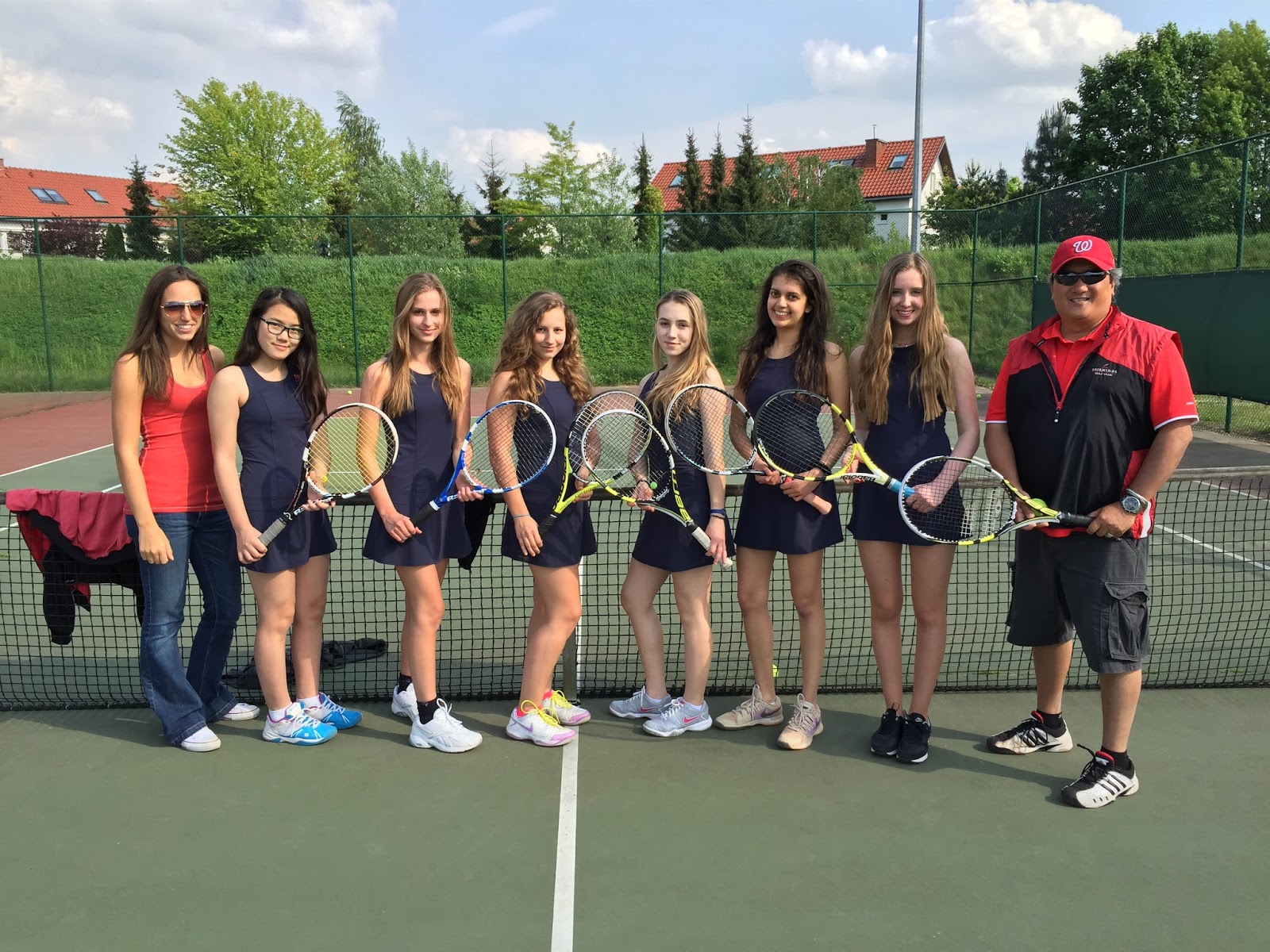
Now that the school year is finished and I am thinking about the highlights, this past spring season coaching the Varsity Girls Tennis Team stands out in my mind.  Just like in my previous post (Part 3), I can't help but apply my learning about Mindsets to our season, and think about how it relates to by role as a Tech Coach.  Some of what I have been thinking about also stems from reading one of my player's CAS reflections after the season, and her takeaways from playing on the team this year, compared to previous ones.

This year, I had the opportunity to shift over to being the Head Coach for the Varsity Girls when the long-time coach stepped down.  I have not worked with the girls team before, so we started the season with a team meeting so I could get to know the players who were trying out, and so we could talk about what they wanted to set as goals for the season.  It was a long conversation, but the girls had a central theme running through everything - they wanted to feel like a team, look like a team, and act like a team.  Part of this feeling came from last year where they went to the one and only tournament without proper uniforms, and played in boys soccer jerseys which were big, baggy and had numbers on the back.  Very unladylike and not inspiring at all.  At the end of that initial team meeting, we agreed on a few things which included: having proper uniforms, building our team spirit and identity, and supporting each other on and off the court.  This was perfect for me, as these are all things which I try to instill in the sports teams that I coach.  Little did I know that it would lead to endless hours of searching online for women's tennis dresses both locally and abroad, which would eventually impact the cookies on my laptop so that now all of the Google Ads and FB side panels are filled with pictures of the latest tennis dresses . . . ugghhhh!

ASW Varsity Girls Tennis Team 2015 - they wanted tennis dresses to look like a team, so we got them!

Fast forward to the end of the season and the CEESA HS Girls Tennis Tournament which we hosted here in Warsaw.  We had students, parents, teachers, and even some Board members and the new Director drop by to watch some tennis and see how it was going.  I think this was significant as we hosted the tournament off campus at a private tennis club, so people had to trek across town to see them play.  And they played fantastically, winning 3 of the 4 individual events plus taking the CEESA Team Championship for the first time in 6 years.  

Now, you might think that getting tennis dresses for the girls is insignificant but it wasn't - it was huge!  The other coaches and players at the tournament all commented on how great they looked on the first day.  My girls were all talking about how they felt like a team for the first time in years - it was all about the dresses (BTW - no other teams were wearing tennis dresses or even proper women's tennis clothing, and some coaches lamented that they could never get their girls into dresses, let alone skirts - we had a new outfit for day 2 ;-).  

CEESA Varsity Girls Tennis Champions 2015 - sporting their day 2 attire of hot pink tops with black skirts!

When the tournament was over and we were wrapping up the season, the girls talked about a number of things which made it very special for them.  I was surprised at what they came up with too.  They were happy about winning the championship of course, but it was all of the other stuff which stuck in their minds.  It was the team spirit that we had cultivated through the practices and out on display at the tournament that stuck with them.  From team warm-ups, to wearing uniforms, to team meetings, to doing team cheers (nobody does that in tennis, but I do), to supporting one another on and off the court.  One of my players even reflected on how "together" we are as a team even though it is a mainly individual sport, which she has never felt before in 5 years of playing on the school tennis team.  The same player also commented on how much she grew and improved this year, both with her skill level but more importantly with the mental part of the game.  What she wrote about was how her mindset changed over the season, and how looking back, it made all of the difference when she was on court at the tournament.

So what did I learn from this, and how does it apply to being a tech coach?  It all has to do with team building.  Building an effective team has to be an intentional process, and the little things count.  Details matter, having common goals and listening to your team is important - done right, this is how you can shift everyone into a Growth Mindset, to bring them together as a group.  Having a growth minded team working together and challenging one another, can lead to great achievements and breakthroughs - sometimes far beyond expectations.  I am really proud of the girls and what they achieved on court, but even more so with how they came together as a team and what they learned about themselves.  One of my players summed it up in her CAS reflection, with something I was constantly saying throughout the tournament - "One point at a time."  She really has taken this to heart, meaning to never give up, learn from your mistakes, and look to the future for the next opportunity . . . all sure signs of the Growth Mindset.